;)


For many transgender women and transfeminine individuals, feeling a disconnect between their facial features and their gender identity doesn’t always involve the entire face. Instead, the concern is often centered on one or two features, most commonly the hairline or forehead.
You may find yourself avoiding pulling your hair back because your forehead feels too tall, or notice a high hairline or pronounced brow bone that doesn’t align with how you see yourself.
If you’ve already tried nonsurgical options and aren’t seeing the changes you hoped for, it’s completely natural to start considering hairline lowering and forehead reconstruction.
Dr. Henry Chen, our founder and lead surgeon, is a double board-certified facial plastic and reconstructive surgeon who specializes in facial feminization surgery (FFS).
With more than 1,000 FFS procedures performed, Dr. Chen approaches the hairline and forehead as foundational elements of facial harmony.
At FFS Institute, you can expect clear preoperative preparation guidance, detailed, realistic recovery instructions, and regular follow-up visits.
Ready to explore what forehead and hairline feminization could look like for you? Call 310-237-1392 or request a consultation here to discuss your options.
Key Takeaways
- Hairline feminization reshapes a typically “M”-shaped hairline with temple recession into a softer, more rounded contour (often described as an upside-down “U”) to align the upper face with feminine proportions better.
- A scalp advancement procedure can physically move the hairline forward and lower its height. Meanwhile, hair transplantation may be used to restore or redistribute density.
- Most patients plan for up to two weeks of downtime, depending on the extent of surgery. Some can return earlier for light or remote work if healing allows.
- Cost varies based on the number of facial areas treated and the complexity of the surgery, with full facial feminization sometimes exceeding six figures.
- Credentials and focused experience matter for a successful hairline feminization outcome. Look for board certification, specialized training, and a high cumulative case volume.
What Is FFS Hairline Surgery?
Hairline feminization surgery is a procedure within facial feminization surgery (FFS) that reshapes and often lowers the hairline to align with more typically feminine facial proportions.
You may also hear it referred to as:
- Hairline advancement
- Scalp advancement
- Hairline-lowering surgery
- Forehead reduction surgery
At FFS Institute, the hairline is evaluated as part of the upper third of the face, which includes the forehead, brows, and upper eyelids.
This region shows some of the most noticeable gender differences. If the hairline sits high or recedes at the temples, the entire upper face can read as more masculine, even if other features have been addressed.
Does FFS Fix Hairlines?
Yes. FFS can directly address a masculine or receding hairline by advancing the scalp to a lower position and reshaping it. This process transforms a typical “M‑shaped” pattern with temple recession into a more rounded contour—often described as an upside-down “U.”
The result is a smoother transition between the forehead and hairline and a more feminine frame for the upper face.
Here’s a before-and-after photo of Enya, one of our patients, to help you see what’s possible for you:
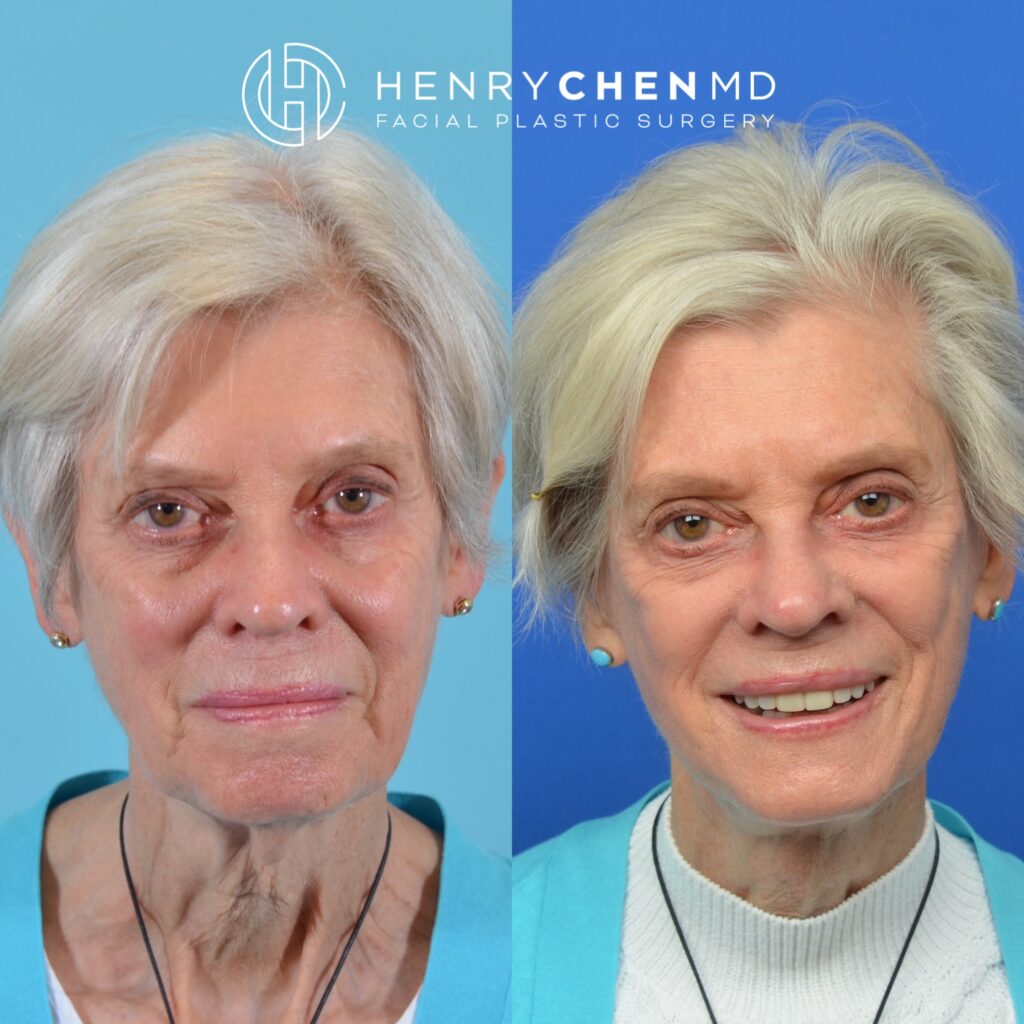
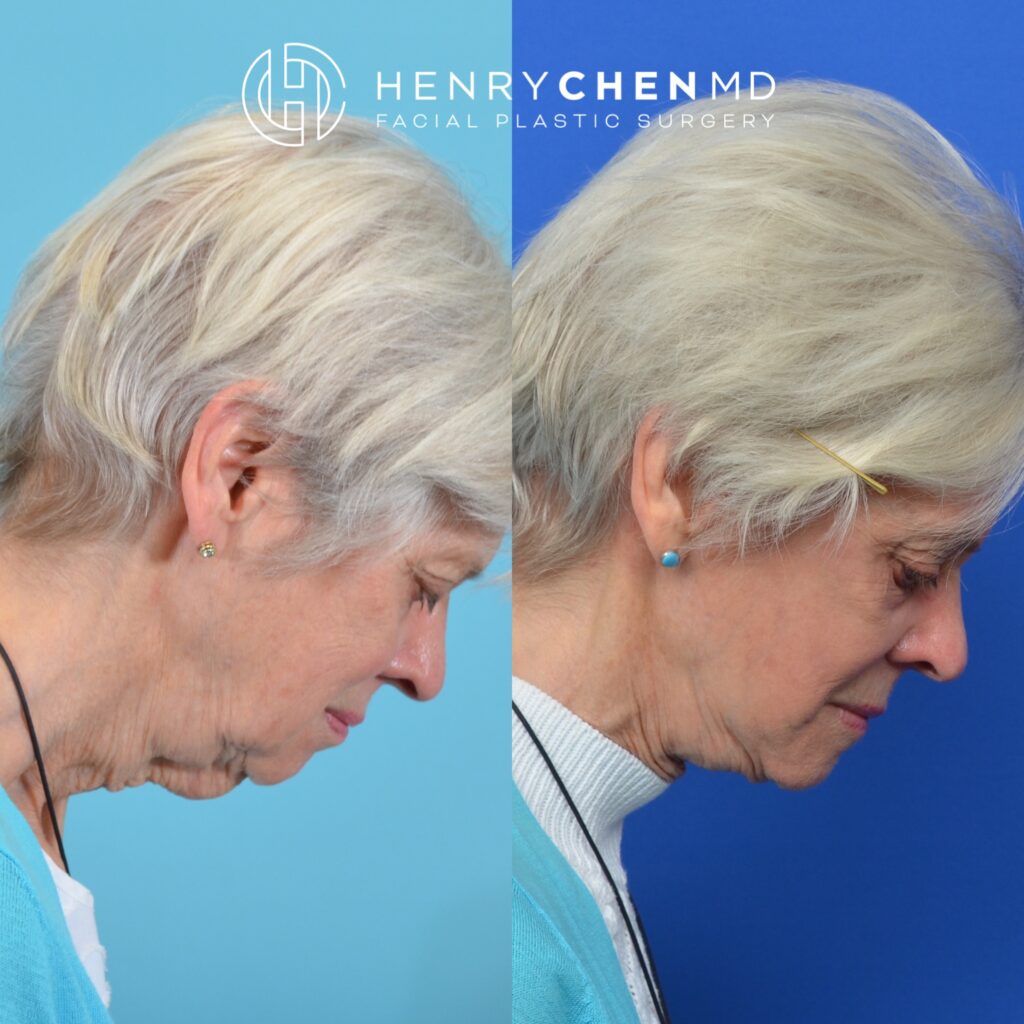
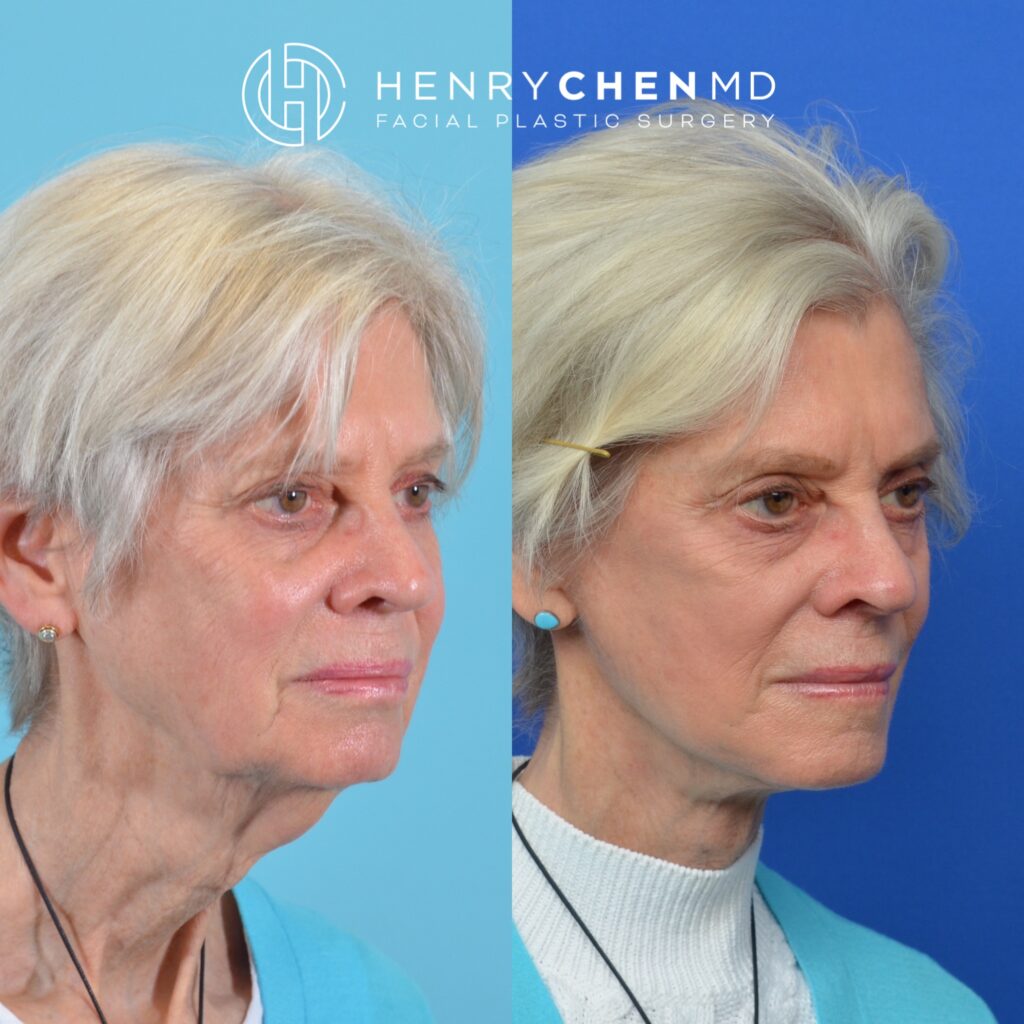
Enya traveled from Arizona to California because she felt deeply connected to Dr. Chen’s work and wanted results that truly reflected who she is.
After nearly four years on hormone therapy, facial feminization surgery felt like the natural next step.
One of her biggest concerns was her M-shaped hairline and temple recession. During her consultation, she and Dr. Chen mapped out a plan for scalp advancement to lower and soften the hairline, especially at the temples.
They also discussed the possibility of a future hair transplant to further refine a rounded, feminine frame.
From the beginning, she felt heard and validated. Dr. Chen’s thoughtful explanations gave her confidence as she went into her very first FFS.
Recovery had its challenges, but even within the first week post-surgery, she began to feel more like herself.
Now, Enya says she feels beautiful, confident, and more aligned with her true identity than ever before.
Differences Between Masculine and Feminine Hairlines
Hairline patterns are influenced by sex-assigned anatomy and hormones, which influence how the forehead develops over time. Understanding these differences can provide helpful context and guide more informed, affirming decisions about facial feminization options.
| Hairline Features | Female Hairlines | Male Hairlines |
| Height | Generally sit lower on the forehead, closer to the brow, creating a shorter forehead height | Tend to sit higher on the forehead than feminine hairlines |
| Shape | Usually rounded, softer, and gently curved from temple to temple | Often has an angular contour with pronounced temple recessions or a widow’s peak |
| Transition Zones | Smoother transitions at the temples, forming an oval shape or continuous curve without deep recessions | More noticeable temple recessions, contributing to an “M”-shaped pattern |
| Proportions | Often show a subtle downward curve from the center toward the sides | Typically appear more horizontal or slightly upward from the center to the sides |
What Is the 4 Finger Hairline Rule?
During hair transplant planning, some surgeons may estimate hairline height by placing four fingers above the brows.
This approach is often referred to as the “Four Fingerbreadths Rule,” which suggests that the mid-frontal point (MFP) of the hairline should sit four fingerbreadths above the glabella (the smooth area between the eyebrows).
While this guideline is simple, it isn’t precise. Finger widths vary from person to person, so the same four fingers can result in noticeably different hairline positions depending on hand size and facial proportions.
For that reason, it’s best understood as a rough visual reference rather than a reliable standard for facial feminization or detailed hairline design.
At FFS Institute, we believe that no two faces (and thus, hairlines) are the same. So, we don’t rely on traditional guidelines like the “4‑finger hairline rule.”
Instead, we customize every procedure, including hairline feminization, to your anatomy, goals, and sense of self.
To help ensure your treatment plan is personalized, we take standardized photos and use morphing software during your consultation to explore potential outcomes and align expectations visually.
Types of FFS Hairline Procedures: What Are My Hairline Advancement Options?
Hairline feminization isn’t a single technique. The right approach depends on your forehead anatomy, hair density, and overall surgical goals. Below are the primary procedures used in FFS hairline surgery.
1. Scalp Advancement (Hairline Lowering)
Many masculine hairlines form an “M” shape, with recession at the temples and a higher frontal hairline.
Scalp advancement repositions the scalp forward to create a smoother, more typically feminine (U-shaped) contour.
2. Hairline Advancement with Forehead Reconstruction
In more comprehensive upper-face feminization, hairline advancement may be combined with forehead reconstruction.
Using a pretrichial or trichophytic incision (an incision placed near the hairline), the surgeon can:
- Lower the hairline
- Reshape the underlying forehead bone
- Reduce brow bone prominence
In some cases, this involves an osteotomy (bone reshaping or cutting) to create a smoother forehead contour while adjusting the hairline position.
Addressing bone and soft tissue together often leads to more balanced, harmonious results.
3. Hair Transplantation for Hairline Feminization
Hair transplantation may also be used as a complementary technique in FFS hairline procedures rather than a standalone solution. It can help:
- Refine the new hairline shape
- Fill temple recessions
- Improve hair density
How We Achieve Natural Results with Hairline Lowering Surgery (Scalp Advancement): What Is Involved in a Hairline Lowering Procedure for FFS?
At FFS Institute, our specialists perform scalp advancement to reduce forehead height and create a softer, more naturally proportioned upper third of the face.
When combining hairline advancement and forehead reconstruction, surgeons typically employ a trichophytic incision, placed at the hairline. This approach provides access to the scalp and forehead while keeping the scar discreet.
Once the incision is made, your surgeon gently repositions your scalp. The extent to which the hairline can be lowered depends on scalp laxity (how much the scalp can safely move).
The surgeon then secures the scalp in its new position and removes excess skin, preserving hair-bearing tissue to ensure the new hairline looks natural and continuous.
Forehead Reduction Surgery Techniques
If your brow ridge is overshadowed by a larger frontal sinus (the air-filled cavity behind the forehead bone), surface contouring alone may not be enough to meaningfully change the hairline shape.
In these cases, a Type 3 cranioplasty, also called a frontal sinus setback, is often recommended. This technique is widely regarded as the standard approach for comprehensive upper-third feminization when structural brow prominence is present.
Here’s how forehead contouring is typically performed:
- Accessing the forehead
An incision across the scalp, often from ear to ear, allows controlled access to the forehead bone and frontal sinus. - Removing and reshaping the bone
The anterior (front) wall of the frontal sinus is carefully removed. It is then reshaped and repositioned further back to reduce brow projection and create a smoother forehead contour. - Securing the new contour
The reshaped bone is stabilized in its new position to allow it to heal securely and maintain a softer profile over time. - Fine-tuning the shape
If necessary, the surgeon may also smooth the orbital rims (the upper eye socket edges) and the adjacent bone to ensure a seamless, natural transition across the upper face.
After forehead contouring, the bone and soft tissues need time to settle and heal. Recovery varies depending on the extent of surgery, and your surgeon will review expected downtime in advance so you can plan accordingly.
Choosing Your FFS Hairline Surgeon: Why Choose FFS Institute for Your Hairline Surgery
Selecting a surgeon for hairline feminization involves more than reviewing credentials alone. The best outcomes come from a combination of focused FFS experience, technical precision, and a deep understanding of facial harmony.
Here’s what sets FFS Institute apart:
- A Practice Dedicated to Facial Feminization
FFS Institute is built specifically around facial feminization surgery. Ours isn’t a general cosmetic practice that “also performs FFS.”
Dr. Henry Chen, founder and lead surgeon, has performed more than 1,000 facial feminization procedures and brings two decades o facial plastic and reconstructive experience, with a strong focus on gender-affirming surgery.
Procedures such as hairline lowering and forehead reconstruction benefit from this level of repetition and specialization, which helps support balanced, natural results. - Double Board Certification and Recognition
Dr. Chen is double board-certified by:
- The American Board of Facial Plastic and Reconstructive Surgery
- The American Board of Otolaryngology–Head and Neck Surgery
He has also been repeatedly recognized as a Los Angeles Magazine Top Doctor (2019 to 2026) and Southern California Super Doctor (2020 to 2026). These distinctions reflect peer recognition and an ongoing commitment to high clinical standards.
For patients considering structural procedures like brow bone reduction and hairline advancement, formal certification and advanced training are important considerations.
- Academic Leadership and Research in FFS
Dr. Chen serves on the Cedars-Sinai faculty within the Otolaryngology Residency Program and has led discussions on facial feminization surgery at national conferences.
He has also contributed research examining differences in skull shape within the context of gender affirmation.
This research-based perspective informs a thoughtful, individualized surgical approach, especially when planning complex upper-third procedures. - Proven Outcomes and Patient Experience
Our before-and-after gallery reflects a consistent focus on harmony rather than exaggeration.
The goal is not a dramatic or “overdone” result but a cohesive, feminine contour that aligns with your identity.
Patients frequently comment not only on their results, but on how they felt throughout the process.
One patient shared:
Down to Earth Surgeon
“Great surgeon and communicates well. Having my FFS (Facial Feminization Surgery) with him has been great.
Aside from having to wait for insurance approval letters (not his fault), it has been a great experience overall.
Dr. Henry Chen is the most down-to-earth when talking to him. I have social anxiety, so talking to people is scary, let alone trying to ask or say anything about surgery. However, he makes you feel safe that you have no problem conveying what you need.”
Valerie Vielmas - Compassionate Care
From your first conversation through recovery, our team is here to guide you at every step, including:
- Pre-consultation education
- Detailed surgical planning
- Surgery-day coordination
- Structured follow-up care
FFS Institute was created specifically to serve gender-diverse patients. Our mission centers on affirmation, respect, and long-term well-being (not just surgical change).
If you’re looking for a team that understands the difference between simply lowering a hairline and creating facial harmony, FFS Institute offers both the technical expertise and patient-centered care to guide you confidently through the process.
Questions to Ask During Your FFS Consultation
When considering FFS hairline surgery, asking thoughtful questions can help you feel more informed and confident. Because the hairline and forehead frame your entire face, it’s completely reasonable to want clarity before making a decision.
During your consultation, you might ask:
- How many FFS hairline or forehead procedures do you perform each year?
- What experience do you have working with hairlines or brow structures similar to mine?
- Would you recommend scalp advancement alone or combined with forehead reconstruction, and why?
- Can I see before-and-after photos of patients with a similar starting hairline or forehead anatomy?
- How do you determine how much my hairline can be safely lowered?
- What does recovery typically look like for the procedure you’re recommending?
As you listen, pay attention not only to the answers but also to how they’re communicated. A good consultation should include clear explanations, a discussion of both benefits and limitations, and a careful review of facial proportions and long-term balance.
When you feel informed, respected, and supported, it becomes much easier to move forward with confidence and clarity about whether FFS is the right step for you.
Board Certification and Fellowship Training in FFS
The World Professional Association for Transgender Health (WPATH) Standards of Care, Version 8, emphasizes that providers offering gender-affirming procedures should have appropriate training, demonstrated competence, and a commitment to ongoing education.
When you’re considering facial feminization surgery (FFS), it’s reasonable to want a surgeon who treats this work as a dedicated specialty, not an occasional addition to a general cosmetic practice.
Facial anatomy is complex, and each region requires specific technical expertise. Surgeons who focus their practice on facial procedures spend years refining the judgment and precision needed to achieve balanced, natural outcomes.
Dr. Henry Chen’s background reflects this focused pathway. His training includes:
- A five-year residency in Otolaryngology–Head and Neck Surgery (Ear, Nose, and Throat)
- A one-year facial plastic and reconstructive surgery fellowship
- 14 years of clinical practice
This layered training, followed by years of focused work in facial feminization, supports the level of anatomical judgment required for procedures such as hairline lowering and forehead reconstruction.
When considering FFS hairline surgery, board certification and formal fellowship training matter. They represent structured, advanced education in facial anatomy, surgical safety, and long-term outcomes.
Before and After Photos: What to Look For
Reviewing before-and-after photos can be helpful when researching FFS, but it’s important to know how to interpret what you’re seeing. Looking closely at a few key details can give you a clearer, more realistic sense of potential outcomes.
✔️ Lighting and Angles
Lighting, camera angle, and head positioning can significantly influence how a face appears in photographs.
Changes in these variables can make surgical results look more dramatic or more subtle, without reflecting an actual difference in the surgical outcome.
When reviewing before-and-after photos, take a closer look at the details:
- Is the lighting consistent in both images?
- Is the camera angle the same?
- Is the head positioned similarly?
Standardized photography helps ensure you’re seeing true surgical changes rather than differences caused by shadows or perspective.
✔️ Timeline
Healing has a significant impact on the final results. When reviewing before-and-after photos, focus on images taken after most of the swelling has resolved, not immediately after surgery.
The American Society of Plastic Surgeons (ASPS) generally suggests evaluating results photographed between three months and one year postoperatively, when healing is more representative of the long-term outcome.
If timing isn’t specified, it’s completely appropriate to ask—context helps you interpret results more accurately.
✔️ Editing
If every result looks flawless, identical, and styled like a fashion campaign, it’s reasonable to look a bit deeper before drawing conclusions.
ASPS has noted that it’s becoming harder to distinguish authentic surgical photography from heavily edited or AI-generated images online.
Asking questions and looking for consistency across multiple cases can help you evaluate results more realistically and make a more informed decision.
Planning Your FFS Hairline Surgery
Preparing for FFS hairline surgery involves more than just scheduling a date. It’s also a process that combines medical preparation, practical planning, and emotional readiness.
At FFS Institute, we guide you step by step so you feel confident, supported, and prepared for a smooth recovery.
- Initial Consultation
Preparation often begins before your appointment. You may find it helpful to:
- Bring a complete medical history, including prior surgeries, medications, and allergies.
- Think through your goals for your hairline and forehead.
- Write down questions about staging or combining procedures.
- Begin planning time off work, travel, or recovery lodging if you’re visiting from out of town.
During your consultation, Dr. Chen will take time to understand your goals and what feels misaligned with them.
Our team will take clinical photographs, and if your plan includes bone work (such as forehead contouring), they may recommend a CT (computed tomography) scan.
This step provides a three-dimensional view of your anatomy, enabling precise, individualized planning.
- Medical Clearance and Medication Planning
Before surgery, medical clearance from your primary care provider helps ensure you’re safe for anesthesia. This step may involve bloodwork and an ECG (electrocardiogram).
During this phase, you’ll typically:
- Complete required labs and evaluations.
- Review all medications and supplements with your surgeon.
- Maintain good nutrition and hydration.
- Keep chronic conditions well-managed.
- Preparing Your Body and Lifestyle
Certain adjustments can help support a smoother recovery.
You may be asked to:
- Stop specific medications that increase bleeding risk.
- Avoid nicotine and alcohol.
- Keep your weight stable.
If hairline surgery is combined with forehead reconstruction or additional procedures, swelling may be more noticeable, so planning your schedule accordingly can reduce stress during recovery.
If you’re traveling for surgery, this is also the time to arrange housing and transportation. Our team can help coordinate logistics for out-of-town patients.
- Getting Your Home and Support System Ready
You’ll need someone with you for the first 24 to 48 hours after surgery. Preparing your space ahead of time can make those first few days much more comfortable.
Consider arranging:
- A support person to stay with you
- A recovery area where you can rest with your head elevated
- Easy access to medications, water, and soft foods
- Extra pillows for support
- Time off work (often one to two weeks, sometimes longer depending on the extent of surgery)
- Help with errands, meals, pets, or transportation if needed
- The Day of Surgery
Be sure to follow your preoperative instructions carefully. Most patients are asked to stop eating and drinking after midnight, avoid wearing makeup or jewelry, and wear loose, comfortable clothing.
You’ll arrive at our fully accredited surgical center with your designated support person.
From check-in through recovery, our team will walk you through each stage so you feel informed, safe, and well cared for.
What Factors Determine the Ideal Hairline Shape in FFS?
- Sexual Dimorphism (Male vs. Female Hairline Patterns)
One key factor is the typical anatomical difference between masculine and feminine hairlines.
Male foreheads are typically more sloped with more prominent frontal bones, while female foreheads tend to appear more vertical and smoother in contour. - Lateral Forehead Height and Proportions
Men have significantly greater lateral forehead height than women, contributing to the temple recession appearance. Feminizing the hairline often involves correcting this proportion. - Scalp Laxity (How Much the Hairline Can Be Lowered)
The degree of hairline advancement depends on scalp laxity. Research shows an average advancement of about 2.0 cm, though individual results vary by anatomy. - Patient Goals and Expectations
There isn’t a single “correct” hairline position. Placement is guided by your preferences, facial proportions, and what can be achieved safely. Thoughtful planning balances aesthetic goals with anatomical feasibility. - Age and Hair Loss Patterns
Age-related and pattern hair loss influence hairline design. Male-pattern recession commonly produces the classic “M-shape,” and surgical planning must account for the grade of baldness.
Do I Need to Shave or Cut My Hair for Hairline Feminization?
For hairline lowering (scalp advancement), the incision is made along the existing hairline, and the hair-bearing scalp is advanced. This means the procedure works directly at the natural hairline rather than requiring full scalp shaving.
In contrast, in hair transplantation procedures, the recipient and donor areas are typically trimmed or shaved to allow precise placement of follicular units.
Hair Transplantation for Hairline Feminization
Hair transplantation can serve as a valuable complement within gender-affirming surgical care. For many transgender and transfeminine patients, refining the hairline is an essential step in creating a softer, more traditionally feminine appearance.
Here are some hair restoration approaches in gender-affirming care:
Simultaneous Hair Transplant During FFS
Simultaneous hair transplant (SHT) is a technique that combines hair transplantation with forehead access during upper-face procedures, enabling both steps to be completed in a single operation.
The process typically involves three stages:
- Donor identification: The surgical team selects the most suitable donor area. During the modified coronal approach, the removed strip of scalp may be preserved for grafting.
- Graft preparation: Hair technicians separate follicles into individual graft units.
- Hairline refinement: A new hairline is designed, and grafts are placed to enhance contour and density.
To prioritize patient safety and reduce risks associated with prolonged general anesthesia, patients are usually awakened and transitioned to light sedation during the grafting phase.
Because there is a limited number of follicles available in a single session, achieving full density (especially in significantly recessed temples) may require a second transplant several months later.
Stages of Hair Transplant Growth After FFS
Hair transplant results develop gradually. A surgeon typically prepares patients for this phased process, from the first few days after grafting through the months that follow.
Early healing focuses on protecting grafts and allowing the scalp to recover. Later stages involve temporary shedding, regrowth, and gradual thickening.
Hair Transplants Before FFS vs. Delayed Hair Transplant After FFS
Some patients consider undergoing a hair transplant to feminize their hairline before facial feminization surgery (FFS). In these cases, surgeons typically recommend waiting at least one year before proceeding with additional facial procedures.
This option allows the transplanted grafts to fully settle, promotes proper healing, and helps preserve follicle viability if future adjustments are needed.
Other patients choose to delay hair transplantation until after FFS. When this approach is selected, surgeons generally advise waiting at least six months following facial surgery.
This period allows swelling to resolve and soft tissues to stabilize, creating a more predictable foundation for graft placement.
Follicular Unit Extraction (FUE) vs. Strip Method (FUSS)
Hair transplantation is typically used to address recessed areas that create an “M”-shaped hairline. It is generally best suited for patients with earlier-stage recession, provided there is sufficient donor density and minimal androgenic alopecia.
Surgeons commonly use two techniques to harvest follicles and reshape the hairline:
- Follicular Unit Strip Surgery (FUSS): A strip of scalp is removed, and follicles are dissected from it. This method is often more time-efficient.
- Follicular Unit Extraction (FUE): Individual follicles are harvested one by one, which can take longer, but avoids a linear donor scar.
In patients with more advanced hair loss patterns, particularly when thinning affects the top of the scalp, transplantation may still be considered if donor supply is sufficient.
In appropriate candidates, the hairline can sometimes be advanced modestly (often up to about 1 centimeter) depending on graft availability and overall density goals.
Hair Replacement Systems and Nonsurgical Options
Not everyone pursuing hairline feminization wants or is ready for surgery. For some patients, nonsurgical options can offer aesthetic improvement without incisions or recovery time.
Hair replacement systems (custom hairpieces or integrated systems) can be designed to create a lower, rounder hairline.
When professionally fitted, they may provide an immediate visual change. However, they require ongoing maintenance, periodic replacement, and careful styling to maintain a natural appearance.
Other nonsurgical options may include:
- Strategic hairstyling to soften temple recession
- Medical therapy for androgenetic alopecia (pattern hair loss)
- Scalp micropigmentation to reduce the contrast between hair and skin
Which Type of Hairline Is Most Attractive?
There is no single “most attractive” hairline. Beauty standards vary across cultures, ages, and individual preferences. What matters most is how a hairline complements your unique facial features and how you feel about your appearance.
That said, certain characteristics are commonly associated with a more traditionally feminine hairline, including:
- A rounded or softly curved shape (rather than a pronounced “M” pattern)
- Reduced temple recession
- A balanced distance between the brows and hairline
- Proportions that feel harmonious with the rest of the face
At FFS Institute, the goal is not to chase a universal ideal but to create a shape that aligns with your facial structure and identity.
Forehead Proportions and Upper Face Feminization
The upper third of the face, from the hairline to the brows, plays a major role in gender perception.
Several elements contribute to upper-face feminization:
- Forehead height: Reducing the height of the forehead to create a more feminine impression
- Brow bone projection: Softening prominent brow ridges to reduce shadowing and angularity
- Hairline shape: Reshaping an “M”-shaped contour into a more rounded pattern typical of traditional feminine hairline
When these elements are adjusted thoughtfully, the result is a more balanced and cohesive upper face.
FFS Hairline Surgery Recovery and Aftercare: How Is the Recovery After a Surgical Hairline Lowering? What Changes Can I Expect in My Hairline After FFS?
Recovery after surgical hairline lowering happens in phases. Understanding the timeline can make the process more manageable and predictable. Here’s what most patients can expect:
- Immediately After Surgery (First Few Days)
In the first several days, swelling is expected. If your hairline procedure was combined with forehead contouring or additional FFS procedures, swelling and bruising may be more noticeable.
Patients stay at an aftercare facility with round-the-clock nursing for the first few days.
You can typically expect:
- Prescription pain medication combined with over-the-counter drugs for the first four to five days
- Bandages in place, with showering restricted until they’re removed.
- Strict rest, avoiding exercise and heavy lifting
You’ll see your surgeon shortly after surgery, so your progress, swelling, and incision sites can be evaluated.
Our team remains in close contact during this early period to ensure you’re healing safely.
- The First One to Two Weeks
By the end of the first week, most incisions have been sealed, and sutures are usually removed. During this phase:
- Bruising fades significantly by about two weeks.
- Exercise remains restricted.
- If additional procedures such as jaw or neck surgery were performed, a compression garment may be required as directed.
- Weeks Two to Six
Between weeks two and six, visible healing continues to improve. Most patients:
- Notice a steady reduction in swelling.
- Feel comfortable returning to work or social settings.
- Experience mild residual puffiness that is usually not obvious to others.
This is often the stage when you begin to feel more like yourself again, even as deeper healing continues.
- Up to 12 Months
Deeper swelling, particularly if bone work was performed, can take up to a year to fully resolve. Subtle refinements continue over time as tissues settle and scars mature.
Final results are typically assessed around the one-year mark, which is why revision procedures, if needed, are usually considered only after full healing.
Hairline surgery is not just about moving the hairline forward. It’s about creating balance in the upper third of the face.
As healing progresses, many patients describe a gradual sense of alignment as their features settle into harmony.
Throughout each stage of recovery, our team provides structured follow-up and guidance so you’re never left guessing about what’s normal or what comes next.
Can I Touch My Hair After a Hair Transplant?
After a hair transplant, you should avoid activities that could disturb the transplanted area during the early healing period, as newly placed fat grafts need time (between three and six weeks following the transplant) to secure in the scalp.
The transplanted follicles are delicate immediately after surgery and can be dislodged with friction.
Hair Care Instructions After Hairline Surgery
Hair washing is typically permitted once your surgeon gives clearance (often about a day after surgery), but it must be done gently to protect the incision or any grafts.
When cleaning the area:
- Wash carefully using sterile saline or mild soap and water, as directed.
- Gently remove any superficial crusting without scrubbing.
- Begin moisturizing the scar only after your surgeon approves, and the stitches have been removed.
Until your surgeon confirms the incision is fully healed:
- Avoid heat styling tools such as blow dryers or flat irons.
- Refrain from chemical treatments, including dyeing or bleaching
- Choose hairstyles that don’t place tension on the hairline.
If you notice increasing redness, swelling, pain, discharge, or any signs of infection around the incision, contact your surgeon promptly. Early evaluation helps ensure any concerns are addressed quickly so your healing stays on track.
When Can I Color My Hair After FFS Hairline Surgery?
Most patients are able to color their hair about four to six weeks after surgery. That window gives your incision time to heal properly before it’s exposed to hair-dye chemicals or heat-styling tools.
Giving your scalp time to recover matters for a few important reasons:
- Hair dye chemicals can irritate healing tissue.
- Heat from blow dryers or flat irons may interfere with healthy scar formation.
- Coloring too soon can increase the risk of inflammation, irritation, or delayed healing.
At FFS Institute, we provide personalized aftercare guidance based on your incision type and how your scalp is healing.
During follow-up visits, we’ll let you know when it’s safe to resume hair coloring and styling, so you can protect your results while getting back to your routine.
Sun Exposure and Swimming After Hairline Surgery
In general, it’s recommended to keep the area out of direct sunlight for at least 6 months. Once the incision has healed, applying a high-SPF sunscreen and silicone gel can help reduce pigmentation changes and support optimal scar maturation.
Risks and Complications of FFS Hairline Surgery: What Are the Risks Associated with Hairline Surgery in FFS?
FFS is generally considered safe when performed by a qualified specialist. However, like any surgical procedure, hairline lowering and forehead reconstruction carry potential risks.
At FFS Institute, we believe transparency is essential. Understanding potential complications helps you make informed decisions and realistically prepare for recovery.
General surgical risks can include:
- Bleeding
- Infection
- Injury to nearby structures
- Adverse reactions to anesthesia
Risk reduction begins with surgeon training and careful planning. At FFS Institute, all procedures are performed by board-certified facial plastic and reconstructive surgeons with extensive experience in FFS.
Shock Hair Loss and Recovery
Shock hair loss is a temporary shedding of native or transplanted hair that can occur after scalp surgery or hair transplant, usually as part of a stress‑related effluvium (excessive shedding of hair due to medication) rather than permanent damage to the follicles.
Most cases resolve spontaneously over a few months, with hair regrowth as the follicles re‑enter the growth phase.
Scalp Numbness After Hairline Lowering
Temporary scalp numbness (also called hypoesthesia, or reduced sensation) is common after forehead reduction or hairline advancement.
Because the procedure involves lifting and repositioning scalp tissue, sensory nerves can be temporarily affected. Sensation gradually improves over several months, sometimes accompanied by mild tingling as nerves recover.
Hairline Unevenness and Revision Surgery
Some degree of asymmetry risk exists with hairline procedures, and there are two primary reasons for this:
- Natural asymmetry: Natural hairlines are not perfectly symmetrical, especially in patients with early androgenetic alopecia (pattern hair loss), where one side may recede more than the other.
- Postoperative refinement: In a minority of cases, revision surgery may be considered after hairline advancement to address concerns about scars, minor contour irregularities, or aesthetic refinements.
Other FFS-specific risks may include:- Scarring on the face
- Possible injury to the facial nerves
- The incision coming apart as it heals (dehiscence)
- Fluid accumulation under the skin (seroma)
- A firm swelling caused by trapped, clotted blood (hematoma)
Cost and Insurance Considerations
For many patients, deciding to move forward with hairline feminization involves meaningful financial planning. Understanding potential costs and whether insurance may help can bring clarity to a process that already carries emotional weight.
How Much Is Hairline Feminization?
The cost of hairline feminization can vary significantly because every FFS plan is customized. Pricing depends on the number of areas addressed and the extent of your surgical plan.
That said, a comprehensive facial feminization surgery plan at FFS Institute, particularly one involving multiple facial regions, may exceed six figures.
To provide general context, here’s a broad overview of typical non-insurance costs by facial region:
- Upper third (hairline, forehead contouring, brow procedures): $10,000 to $50,000
- Middle third (nose, cheeks): $6,000 to $18,000
- Lower third (lips, jaw, chin, neck): $4,500 to $50,000
While hairline feminization often falls within the upper-third category, the final price depends on whether it is performed alone or combined with forehead reconstruction or additional procedures.
While the financial commitment can feel substantial, it doesn’t automatically place surgery out of reach.
FFS Institute accepts PPO (Preferred Provider Organization) insurance plans, which may help make treatment more accessible for eligible patients.
The most accurate way to understand cost is through a personalized consultation, where we can help you assess your surgical plan and any potential insurance considerations.
Insurance Coverage for FFS Hairline Procedures
Insurance coverage varies by policy and how medical necessity is defined. In recent years, many gender-affirming procedures, including FFS, have increasingly been recognized as medically necessary for some transgender and nonbinary patients.
Major organizations, including WPATH and UCSF (University of California, San Francisco), have supported access to medically necessary gender-affirming care. However, insurers rarely publish a clear list of covered FFS procedures, which can make the process feel uncertain.
Coverage often depends on whether a procedure, such as hairline lowering or forehead reconstruction, is documented as part of treatment for gender dysphoria. Approval is usually evaluated per procedure, rather than as a single bundled FFS category.
The process may include:
- A support letter from a qualified mental health provider
- Submission of your surgeon’s treatment plan
- Review of your policy for exclusions related to gender-affirming care
- Possible requests for additional documentation before a final decision is made
The process can be complex and time-consuming. At FFS Institute, our team helps guide patients through the paperwork, clarifies requirements, and, when possible, works toward obtaining approval.
Financing Options for Hairline Feminization
| Financing Option | How It Works | Pros | Cons |
| Financing Plans | Some patients choose to use medical financing companies, such as CareCredit, to divide costs into monthly payments. Depending on the lender and your eligibility, plans may include fixed terms, variable rates, or promotional no-interest periods. | Smaller, more manageable monthly payments Ability to move forward with surgery sooner Defined repayment timelines | Interest may increase the total cost Approval typically requires a credit check |
| Cash Pay (Self-Pay) | Paying out of pocket offers flexibility in timing and treatment planning. Without relying on insurance approval, you have more control over timing, surgeon selection, and the full scope of your surgical plan. | Full control over your customized surgical plan No waiting on insurance authorization decisions Greater flexibility to combine procedures as recommended | Requires substantial upfront funds Long-term saving or financial planning for many patients |
| Other Financial Support: Grants, Crowdfunding and Mutual Aid | Some patients explore crowdfunding or mutual aid to help offset the cost of surgery. You may choose to share your story within your personal network on platforms like Instagram or Facebook, or use fundraising sites such as GoFundMe or Kickstarter to reach a broader audience. | In some cases, fundraising can cover a significant portion of surgical costs, and in other cases, even the full amount. Certain nonprofit organizations offer pro bono or reduced-cost surgeries through partnership programs. | Grant opportunities may be limited, competitive, and tied to specific application cycles. Crowdfunding can require considerable time, effort, and emotional energy. There’s no guarantee that you’ll reach your full fundraising goal. |
There isn’t one “right” way to prepare financially for surgery. The right approach is the one that feels practical and sustainable for your situation.
Some patients prefer to save gradually over time. Others combine personal savings with financing so they don’t have to delay their plans for years.
You might consider:
- Saving a portion upfront and financing the remainder to keep monthly payments more manageable
- Planning for travel, lodging, time off work, and follow-up visits if you’re coming from out of town
- Setting aside funds consistently while also gathering any required insurance documentation
Whatever path you choose, aim for a plan that supports not only your surgical goals but also your overall financial stability and peace of mind.
Advanced Surgical Techniques and Research in FFS Hairline Surgery
At FFS Institute, surgical planning is informed not only by clinical experience but also by ongoing academic engagement and research.
Dr. Chen serves as a National Invited Lecturer on FFS, reflecting peer recognition within the field. He remains actively engaged with the evolving surgical literature and continues to refine his technique, focusing on safety, anatomical precision, and natural-appearing outcomes.
His academic contributions in facial surgery have helped push the field toward more objective measurement and evidence-based planning. Selected publications include:
- Goli, R, Lasky S, Ray, E, Chen H. Assessment of cranial sexual dimorphism using 3d reconstruction: implications for gender-affirmation surgery. J Craniofac Surg. 2023; 34(4):1231-1234. doi: 10.1097/SCS.0000000000009266.
- Amin L, Wu AW, Chen HH. Functional Outcomes After Feminizing Rhinoplasty. Facial Plast Surg. 2025 Apr 24. doi: 10.1055/a-2588-6903.
Trichophytic Incision Techniques for Scar Minimization
Trichophytic incision techniques help conceal the hairline scar by allowing hair to grow through or directly in front of the incision line. This outcome may be achieved by beveling the incision line or carefully trimming a thin layer of epidermis at the wound edge before closing the skin.
By preserving and strategically positioning hair follicles, new hair grows along the scar, helping it blend more naturally into the surrounding hairline.
In hairline advancement (hairline lowering) procedures, irregular trichophytic incisions may be paired with a posterior scalp advancement flap. This combination helps soften the transition at the hairline and can make the scar much less noticeable as it heals.
The goal isn’t just to position the incision at the hairline. It’s to design the closure so that it encourages natural camouflage over time as healing progresses.
Combination Procedures: Integrating Hairline Surgery with Upper Face Feminization
At FFS Institute, hairline lowering (scalp advancement) is rarely viewed in isolation. It’s often planned as part of comprehensive upper-face feminization, alongside procedures such as brow lift, brow bone (forehead) reduction, and forehead contouring.
This approach reflects the anatomy of the upper third of the face, where some of the strongest gender cues appear. Hairline height, brow position, and brow ridge prominence all work together, so adjusting one without evaluating the others can leave the outcome feeling less balanced.
Commonly combined procedures include:
- Brow Bone Reduction
This procedure softens a prominent brow ridge by reshaping the underlying bone. The goal is a smoother forehead contour that reduces shadowing and heaviness in the upper face. - Brow Lift
A brow lift elevates and repositions the brows to create a more open, feminine expression. When coordinated with hairline positioning, it helps ensure the forehead does not appear shortened but still heavy. - Upper Eyelid Surgery (Blepharoplasty)
Upper eyelid refinement can further brighten the eyes and complement changes in brow position, contributing to a more feminine look.
When these procedures are thoughtfully integrated, they help create a balanced upper face. Planning them together allows the proportions to be adjusted as a unit, supporting a cohesive, natural-looking outcome.
Frequently Asked Questions About FFS Hairline Surgery
1. How long does facial feminization surgery take?
Because every facial feminization surgery plan is customized, there isn’t a single standard operating time. More focused procedures typically require fewer hours, while comprehensive surgeries involving the upper, mid, and lower face can take up to 12 hours.
Before surgery, your surgeon will review your specific plan, including the estimated timeline, so you have a clear understanding of what to expect.
2. Can I color my hair after FFS hairline surgery?
In most cases, patients can safely color their hair about four to six weeks after surgery. This waiting period allows the incision to heal properly before it’s exposed to chemical treatments or heat styling.
3. When will my hairline-lowering scar look normal?
Scars typically begin to soften and fade within four to six weeks, with a more natural appearance often developing around three to six months, as the majority of healing takes place.
4. What medications should I take after a hair transplant?
Most patients use pain medication for the first four to five days after a hair transplant.
This often includes a combination of over-the-counter options, such as Tylenol (acetaminophen) and Advil (ibuprofen), and, if prescribed, a short course of narcotics for additional comfort.
Some patients also choose to use Arnica, a homeopathic supplement often used to help with swelling and bruising.
At FFS Institute, your surgeon will provide specific medication instructions based on your medical history and recovery plan. Following the recommended timing and dosage helps support safe, steady healing.
5. How do I clean my hair after hairline surgery?
In most cases, you can shower the day after surgery, using warm (not hot) water and avoiding direct pressure on the incision.
Depending on your specific procedure, your surgeon may recommend waiting a few days before washing your hair, based on how your scalp is healing.
Once you’re cleared to wash your hair, a gentle approach is key:
- Use light, careful movements
- Avoid scrubbing the incision area
- Let water and a mild shampoo run over the scalp rather than rubbing
- Pat your hair dry instead of towel-drying vigorously
Washing too aggressively can disrupt healing incisions—or grafts, if you’ve had a transplant.
Think of the early days as protecting delicate tissue. A careful, light approach helps support proper healing and scar formation.
Because recovery timelines vary, always follow the specific instructions provided by your surgical team.
6. Can I exercise after hairline surgery?
In most cases, it’s best to plan for up to four weeks before returning to full physical exercise, though the exact timing depends on the extent of your procedure and how your healing progresses.
Light activity, such as short walks, may be allowed earlier, but strenuous workouts, heavy lifting, and activities that raise blood pressure should be avoided during the early healing phase.
If recovery is going smoothly, many patients can return to light or remote work sooner. Your surgeon will provide personalized guidance based on the healing of your incision and scalp.